
Your clients' form falls apart when it matters most. This is how you fix it.
Applied Cueing and Execution is the number one skill that separates mediocre trainers from truly elite trainers. Not knowing what to write down. Knowing how to get the client in front of you to actually perform it.
If any of this is you, keep reading.
You look at your clients' form and know it is not where it should be, but you are not sure how to get it there.
Your clients' execution gets worse the closer they get to failure.
You know a lot about training, but struggle to turn that into what your client actually does in the gym.
Your clients are not getting the results they should be getting.
You are not making the income you want to make as a trainer.
Everything you post feels like the same recycled trends and catchphrases everyone else is repeating.
The best program in the world is useless if the client cannot do the thing you wrote down.
This has always been the job.
Long before social media, trends, influencers, and AI, a trainer's job was to help the client in front of them train better. Move better. Perform better. Turn their effort into a better result.
That is the difference between the industry average trainer and the trainer who becomes a respected expert. And right now it is the biggest opportunity in the fitness industry. While everyone else chases the newest sound bite and best exercise trend, the trainer who can actually coach execution has real lasting value. It shows up in better results, better content, better retention, more referrals, and the ability to charge more.
This is not just another cueing course.
It is not a list of tips. It is not "say this when your client does that." It is the complete framework, built across two connected parts and over 90 videos.
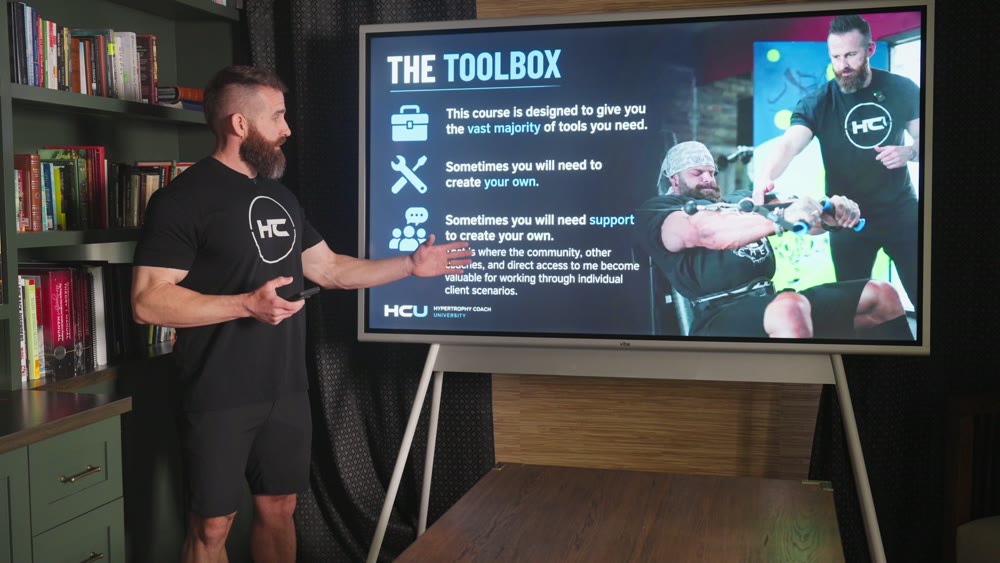 Part 1 · The Lens
Concepts, principles, and the bigger lens
Understand client execution at a deeper level. Why form matters, how it connects to results, how to get clients to care, and how to decide what the client actually needs. View form, cueing, regressions, progressions, pain, effort, fatigue, buy in, and adherence through one coaching framework. Without the lens, cues are just random tools.
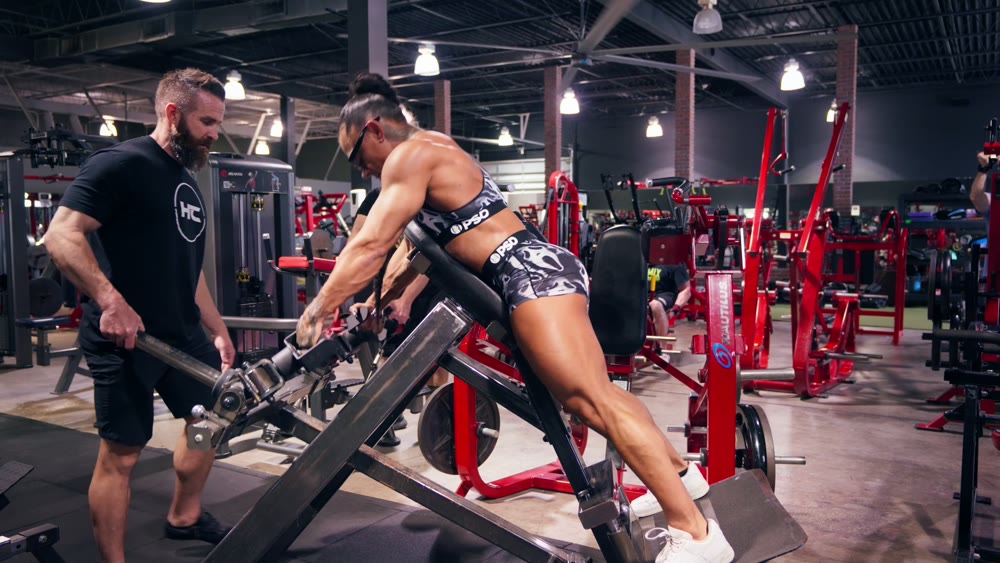 Part 2 · The Practical
Practical tools and movement application
Bring the framework into the gym across a large movement library: the real tools, setups, adjustments, regressions, progressions, and coaching strategies used to get clients to execute. Not just know more. Coach better. See better. Communicate better. Adjust better. Get better results.
Over 90 videos. Tap to expand.
- The Purpose of Part 1
- The Standard: Execution as Ownership, Problem Solving and Tools
- The End Goal: From Beginner to Elite
- The Client and Trainer Billboard
- Client Form Buy In
- The Goal of Training: Increase Capacity
- Capability, Control and Capacity
- The Ideal or Most Common Flow
- When the Flow Breaks: Pain and Regression Branches
- Warmups and Working Sets
- Transition to Practical
- Pauses
- End range control
- Touching (appropriate)
- The push into reference
- Closer to insertion focus
- Arcing focus
- External cues and landmarks
- Short ROM reps
- Tempo
- Fixed external ROM
- Internal cues
- Foundational Control Skills
- Spine
- Scapula
- Ribs and bracing
- Exercise Checklist
- The execution checklist applied to a chest supported Prime row
- Back (10)
- Upper back row, lat row, high and low row, pull up with regression, cable pullover, bent over row, low back extension, wide grip pulldown, neutral grip pulldown, chest supported row
- Chest (4)
- Flat dumbbell press, incline dumbbell press, cable fly, converging press
- Delts (5)
- Dumbbell lateral raise, dumbbell rear delt, cable lateral and Y raise, smith overhead press, cable rear delt fly
- Quads (4)
- Free weight squat variations, split squat and lunge, leg press, leg extension
- Glutes (5)
- Hip thrust, RDL, 45 degree hip extension, split squat and lunge, step ups
- Hamstrings (2)
- Seated leg curl, lying leg curl
- Arms (7)
- Standing, incline and spider curl, cable curl, preacher curl, cable extensions, free weight skull crusher, dip machine, JM press
- Calves (3)
- Standing calf raise, hip loaded calf raise, seated calf raise
- Abs (2)
- Ab mat crunch, hanging leg raise
- Profiler and Spotting
- Using machine safeties for death prevention
- Specific and progressive assistance spotting through sticking points
- Where to touch and spot across presses, raises, curls and leg work
- Efficient spotting positions for hack squats, leg press, pulldowns and squats
- Single cues for working sets
- Regression Model
- Pull up flow and progression, plus the assisted squat flow
- Corrective Framework
- Comparing side to side
See the coaching in action.
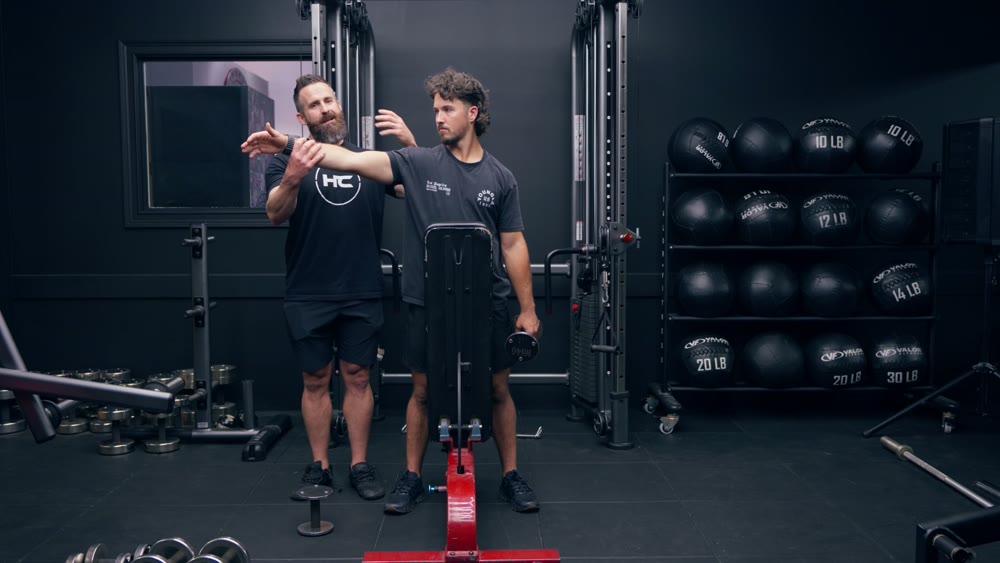
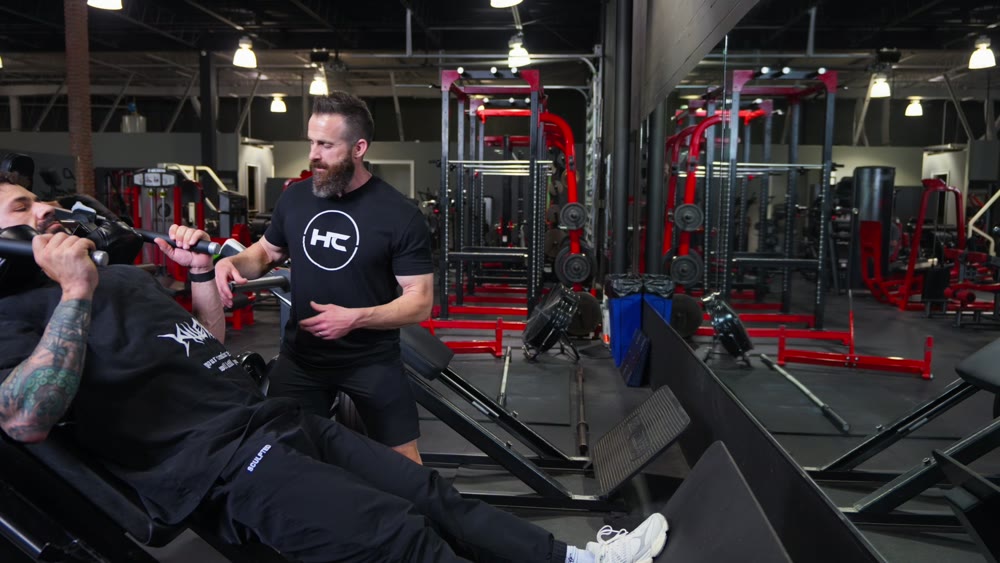
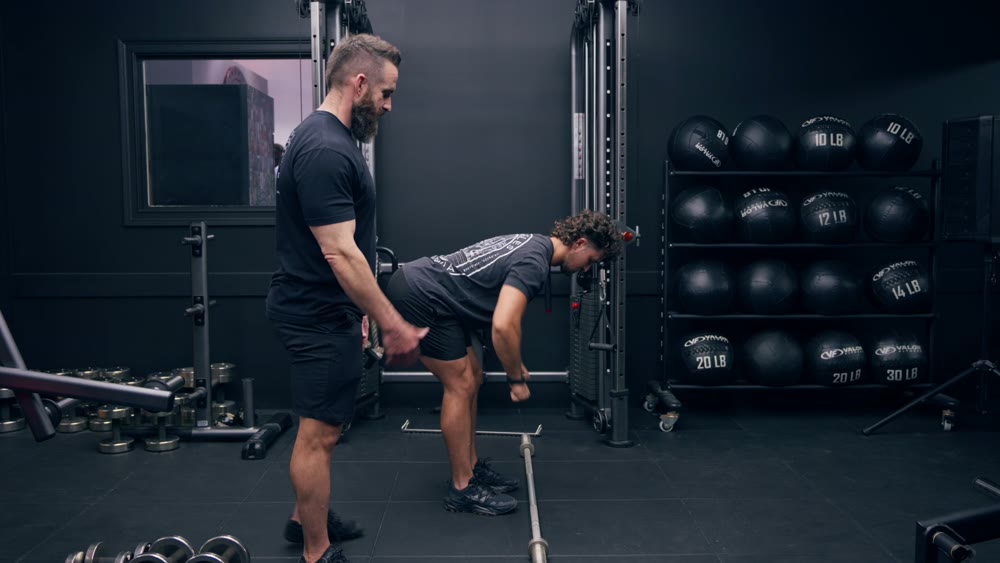
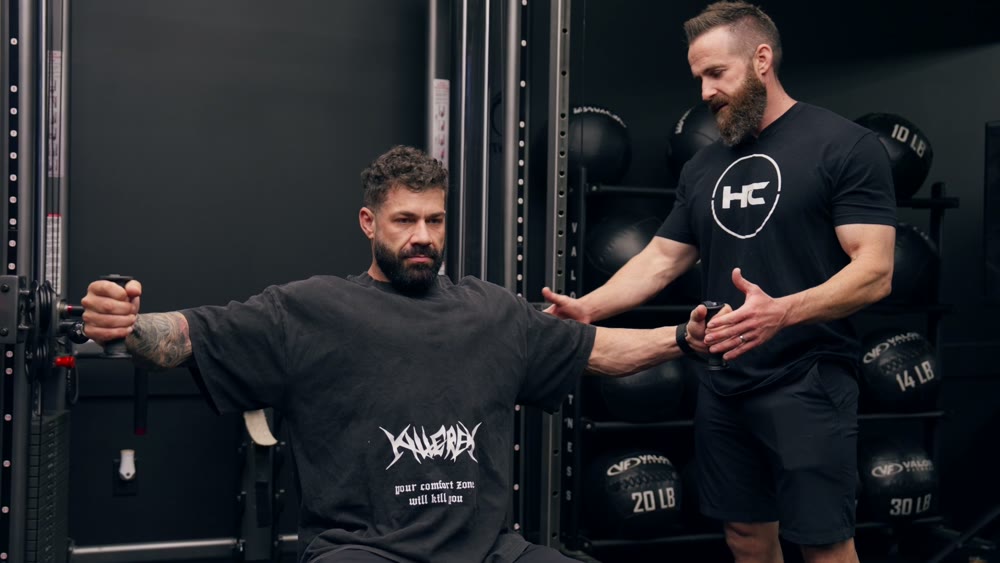
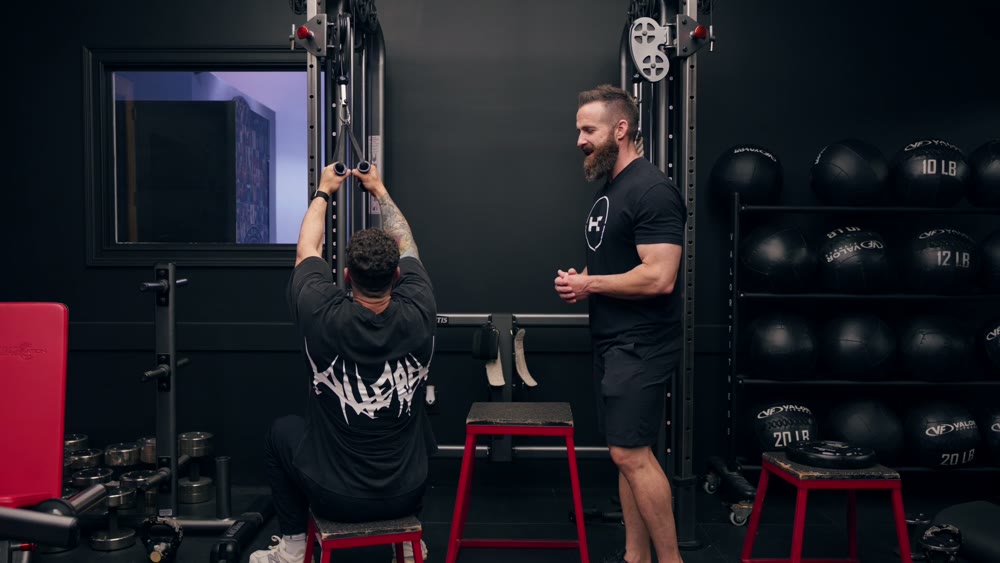
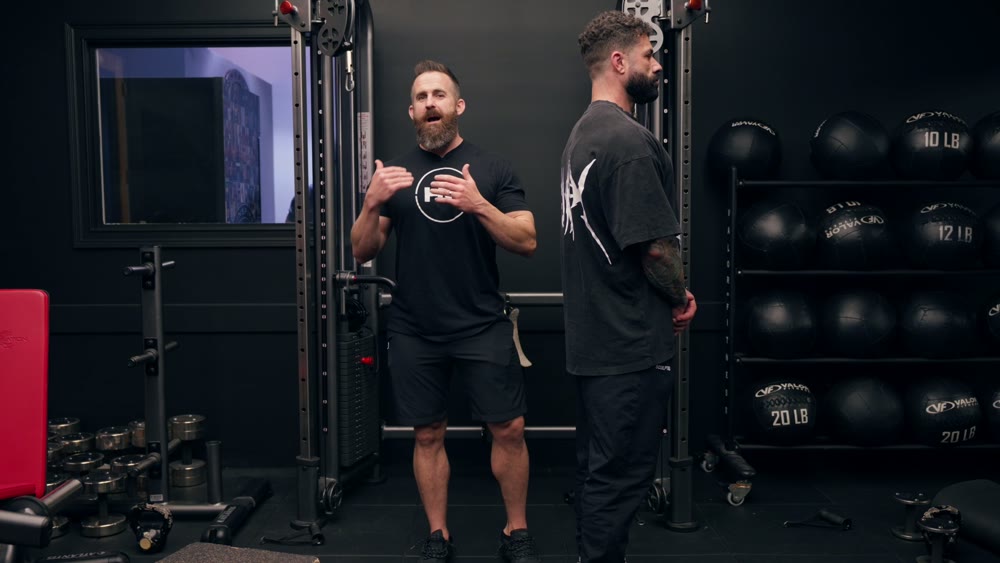
I have spent 20 years developing trainers.
Long before social media was the business, I became a six figure trainer. Then I spent the next stage of my career teaching other trainers how to do the same. After that, I went from a six figure trainer to building a seven figure training business.
For the last 10 plus years I have helped trainers develop the technical knowledge, business understanding, communication skills, and professional standards needed to build successful careers. I truly believe this is one of the most important courses I have ever created, because this is where everything meets the real world.
- Your biomechanics, programming and exercise selection
- Your communication and client buy in
- Your results, your content and your business
- All of it connects to your ability to get clients to execute
Trusted by the coaches who coach coaches.
There is more training information available than ever, but much of it is either incorrect, overcomplicated, or difficult to apply. Joe has consistently pierced through that noise and made high quality training information understandable and practical.
Choose how you want to level up.
Get Level 3 on its own, or take the complete system as a bundle and save $600.
Doors are closed right now. Join the waitlist and you will be first in line when the next window opens.
Prefer to pay over time? Interest free payment plans are available at checkout.
- Over 90 videos covering concepts, principles, coaching tools and practical application
- The complete framework for cueing, progressing, regressing and improving execution
- The full movement library with real coaching application
- Profiler and spotting, regression, and corrective frameworks
- Your spot in the inaugural class
Become the trainer whose skill shows up in how their clients train.
Keep chasing trends and the next programming secret, or develop the one skill that has always separated elite trainers from the industry average. The ability to get your clients to actually perform. Let us raise the industry standard together.
Explore the other levels
Each level stands on its own. During the Level 3 launch you can grab Level 1 or Level 2 at the same price.
The Business of a Fitness Professional
The foundational business and professional skills behind a successful coaching career.
Applied Hypertrophy Biomechanics
Your deep dive into the biomechanics that genuinely matter for muscle growth.